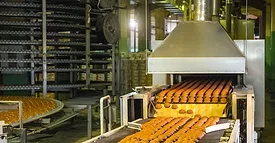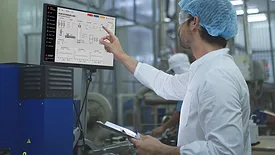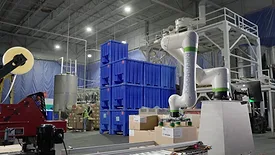
Black & Veatch’s Kim Lovan and Carrie Woehler discuss how food and beverage manufacturers are implementing automation, considerations for vetting solution providers, and how automation projects have evolved.
Through precision fermentation, engineered microbial “cell factories” can generate specific proteins that can serve as next-generation food ingredients.
Fermentation has evolved into precision fermentation, utilizing biotechnology to engineer microorganisms that produce high-value food ingredients. These "cell factories" create proteins and compounds, enhancing quality and reducing environmental impact. Techniques like recombinant DNA now apply to everyday ingredients such as milk and egg protein alternatives.
By integrating modern pump technology, hygienic design principles, clean-in-place (CIP)-ready systems and energy-efficient components into the plant layout from the start, manufacturers can reduce waste, secure lower long-term operating costs and meet stringent food safety requirements.
It used to be that if you used one particular vendor’s automation products or sensors, you were locked in forever. With today’s open standards-based networks, users are no longer locked in and can shop around for sensors, industrial PCs, PLCs and industrial network devices.
While OEE is a must-have for troubleshooting line problems, contextualized OEE data with its time signatures is a key input in analyzing when and what went wrong with a plant’s total production process, including wasted product and utilities. And it can even aid in the track-and-trace process.
EIC Alyse Thompson-Richards recaps some recent plant openings and expansions in the food and beverage industry, including Little Sesame’s new plant, InnovAsian’s frozen food facility, Charcuterie Artisans’ innovation center, BRIDOR’s expansion, M2 Ingredients’ innovation center and Boh Bah’s production facility.
Carryback presents not only a sanitation concern — it also leads to product loss and maintenance challenges. Here are some strategies for recovering product and keeping conveyors running smoothly.
Conveyor carryback is a serious issue in food processing facilities that can disrupt operations if not managed. Many facilities lack effective strategies to handle carryback, risking unscheduled downtime. Operators should implement preventative maintenance measures to minimize its impact.
The first continuous mixing systems were designed for low-volume production of stiffer doughs and products such as pretzels, crackers and bagels. But in the 30-plus years since, several kinds of continuous mixers have emerged to handle many distinct application challenges and all dough types.
Data silos and poor data quality continue to impact AI adoption in CPG manufacturing, recent research from Veev shows, but continuing integration and unification is helping.
AI is revolutionizing manufacturing with applications in predictive analytics and product development. Despite challenges like data silos and integration, progress is being made towards agentic AI. Discover how companies are adapting and what the future may hold.
EIC Alyse Thompson-Richards recaps some recent plant openings and expansions in the food and beverage industry, including DrinkPAK’s East Coast beverage manufacturing facility, V&V Supremo’s Wisconsin plant, Danone’s Texas facility expansion, Cal-Maine Foods’ optimization and expansion project, and MMPA’s dairy plant acquisition.