3D printing, while serving roles in package design, tools and spare parts, is finding applications for creating unique foods that aren’t practical for conventional methods.
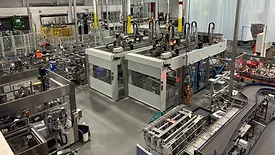
Additive manufacturing can describe two technologies in food production — the more commonly known is 3D printing, which has been borrowed from 3D tool and parts making, but robotic work cells can also fit the definition of additive manufacturing.
From apples to tropical blends, processors are using integrated separation strategies to maximize recovery, maintain product integrity and streamline operations.
Desteaming — the practice of replacing steam with a right-sized thermal solution like hot water — can improve the efficiency of hot water generation, helping to reduce operational expenses and cut greenhouse gas emissions.
Manufacturers are improving operator safety through third-party services, such as continuous training from OEMs, risk assessments and new production line approaches from consultants. In addition, digital training at the machine level is increasing operator safety.
Operator safety is becoming a critical lever for performance in food and beverage manufacturing. As workforce challenges intensify, processors are investing in automation, advanced HMI design and safer equipment to improve both retention and productivity.
In an industry where product quality increasingly determines competitive advantage, the ability to see what you're processing isn't a luxury — it's a fundamental requirement for profitable operation.
A synthetic dye that was once stable across wide pH ranges, heat loads and storage conditions may be replaced with a pigment that behaves very differently under shear, thermal cycling or light exposure.
Installed at Almanac's brewery in Alameda, California, Aircapture's modular direct air capture unit pulls carbon dioxide from ambient air and delivers beverage-grade liquid CO₂.
By integrating modern pump technology, hygienic design principles, clean-in-place (CIP)-ready systems and energy-efficient components into the plant layout from the start, manufacturers can reduce waste, secure lower long-term operating costs and meet stringent food safety requirements.
The first continuous mixing systems were designed for low-volume production of stiffer doughs and products such as pretzels, crackers and bagels. But in the 30-plus years since, several kinds of continuous mixers have emerged to handle many distinct application challenges and all dough types.