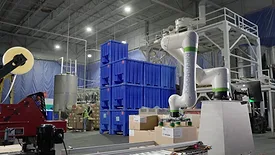
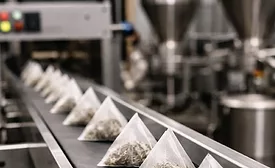
For Pearl Crop, a processor of nuts and seeds based in California, seasonal labor pressures prompted a search for a more flexible automation strategy, ultimately leading the company to explore a robot rental model rather than a traditional capital equipment purchase.
Ken's Foods implemented an on-machine architecture with Rockwell Automation PowerFlex 350 variable frequency drives (VFDs) accessible directly on production equipment, simplifying operations and delivering measurable gains.
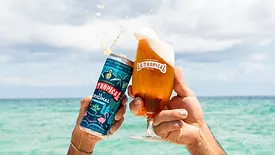
La Tropical, a Miami brewery with deep Cuban roots, uses a Qdos 60 peristaltic pump to precisely dose small amounts of tetra hop extract and to meter chemicals in its CIP system.
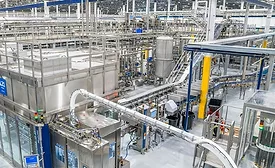
Through a combination of advanced automation, smart infrastructure and tailored financial solutions, Siemens helps DrinkPAK scale its operations, maintain reliability, maximize energy efficiency and enable sustainable decision-making.
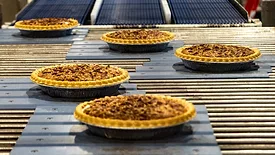
Gardner Pie Company turned to Benchmark Automation to develop a series of conveyors to support manufacturing and packaging of baked and frozen pies without damaging tender, flaky crusts.
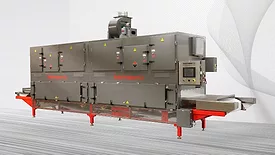
When exposing a product with an uneven moisture content (moist interior/drier exterior) to a rapidly oscillating RF field, the energy will preferentially target and remove moisture from the moist interior without overheating or discoloring the exterior surfaces.
Galloway Company turned to Emerson for Coriolis meters to optimize its dairy processing operations by delivering precise and dependable flow measurements.
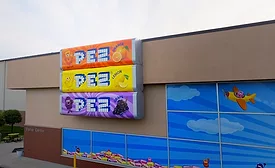
At the company's Connecticut facility, more than 1.5 million tablets are produced every hour.
Looking to reduce downtime caused by cleaning, maintenance and startup, as well as improve print consistency across its lines, the confectioner turned to Leibinger for a coding solution.
In addition to constant maintenance, which slowed production, the plant also had to lower the freezer’s evaporating temperature by 5-10 degrees, increasing energy consumption and utility costs.
 RSS
RSS