Smart manufacturing technologies, such as digital tools and connected systems, can improve visibility, performance and decision-making on packaging lines.
3D printing, while serving roles in package design, tools and spare parts, is finding applications for creating unique foods that aren’t practical for conventional methods.
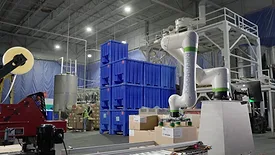
Additive manufacturing can describe two technologies in food production — the more commonly known is 3D printing, which has been borrowed from 3D tool and parts making, but robotic work cells can also fit the definition of additive manufacturing.
Digital recorders and data management software ease recordkeeping and regulatory compliance — compared to traditional paper-based methods — increasing consumer safety and enhancing operational efficiency for processors.
While at times the number of food safety recalls seems to be rising, in most cases, the recalls are smaller in lot size and don’t progress very far through the supply chain because the tools stop most major potential outbreaks.
Through a combination of advanced automation, smart infrastructure and tailored financial solutions, Siemens helps DrinkPAK scale its operations, maintain reliability, maximize energy efficiency and enable sustainable decision-making.
In past years, customers have focused more on automation as part of broader sustainability or throughput goals. Now, the focus has shifted slightly, with more emphasis on how many operators can be reassigned or how much support a system will require post-install.
Gardner Pie Company turned to Benchmark Automation to develop a series of conveyors to support manufacturing and packaging of baked and frozen pies without damaging tender, flaky crusts.
Manufacturers are improving operator safety through third-party services, such as continuous training from OEMs, risk assessments and new production line approaches from consultants. In addition, digital training at the machine level is increasing operator safety.
Operator safety is becoming a critical lever for performance in food and beverage manufacturing. As workforce challenges intensify, processors are investing in automation, advanced HMI design and safer equipment to improve both retention and productivity.
Black & Veatch’s Kim Lovan and Carrie Woehler discuss how food and beverage manufacturers are implementing automation, considerations for vetting solution providers, and how automation projects have evolved.
It used to be that if you used one particular vendor’s automation products or sensors, you were locked in forever. With today’s open standards-based networks, users are no longer locked in and can shop around for sensors, industrial PCs, PLCs and industrial network devices.